

How to Sell a House with Water Damage in Houston
Water damage is one of the most common reasons Houston homeowners end up in a tough spot when it’s time to sell. Whether it came from a burst pipe, a roof leak, from flooding or years of slow moisture intrusion, water damage has a way of compounding. Left too long, it turns into mold. Left even longer, it eats into structural wood, subfloors, and framing.
If you are staring at a water-damaged home and wondering whether selling is even realistic, the answer is yes. But the process looks different than a normal home sale. This guide will walk you through what water damage actually means for your home, what repairs cost, what you have to disclose, and what your options are.
How Water Damage Is Classified — and Why It Matters
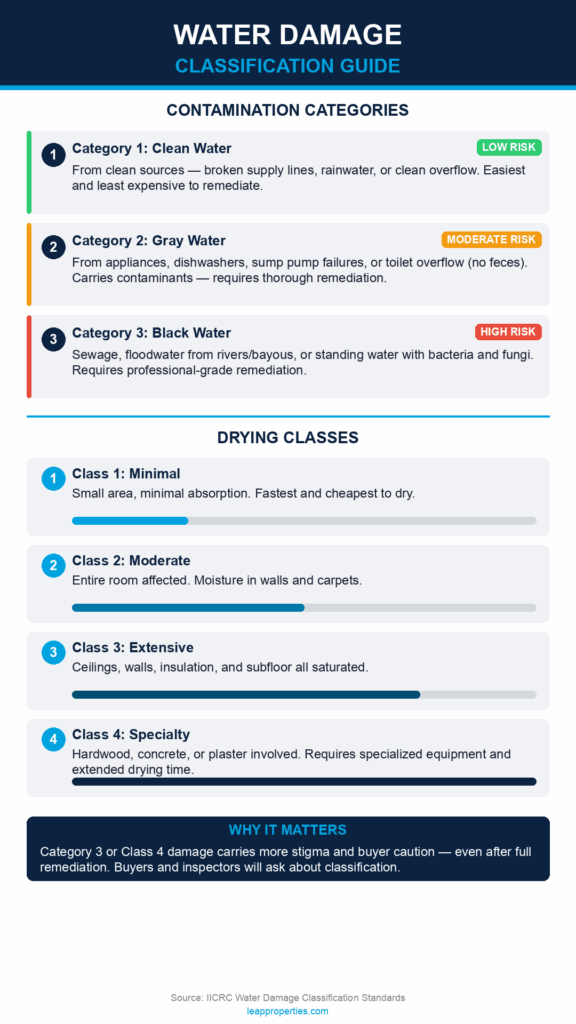
The Institute of Inspection, Cleaning and Restoration Certification (IICRC) — the professional body that certifies water damage remediation specialists — classifies water damage in two ways: by contamination level and by class of drying complexity.
Contamination categories:
- Category 1 (Clean Water): From a clean source — broken supply line, rain water, or clean overflow. Easiest and least expensive to remediate.
- Category 2 (Gray Water): From appliances, dishwashers, sump pump failures, or toilet overflow with no feces. Carries some contaminants and requires more thorough remediation.
- Category 3 (Black Water): Sewage, floodwater from rivers or bayous, or water that has sat long enough to harbor bacteria and fungi. Requires professional-grade remediation and full protective equipment.
Drying classes:
- Class 1: Small area, minimal absorption. Fastest and cheapest to dry.
- Class 2: Entire room affected. Moisture in walls and carpets.
- Class 3: Ceilings, walls, insulation, and subfloor all saturated.
- Class 4: Hardwood floors, concrete, or plaster involved. Requires specialized drying equipment and extended drying time.
Why does this matter when selling? Because buyers and their inspectors will want to know what category and class of water damage occurred. Category 3 damage or Class 4 drying situations carry more stigma and more buyer caution than Category 1 situations, even after full remediation.
What Buyers (and Lenders) Are Looking For
A traditional buyer financing with a mortgage will run into several hurdles with a water-damaged home:
- Lenders typically require a professional inspection confirming all water damage has been fully remediated.
- Appraisers must note visible water damage, staining, and any indicators of past moisture intrusion.
- If mold is present, most conventional lenders will not approve a loan until the mold is remediated and a clearance test is passed.
- FHA and VA loans have especially strict requirements around water damage and mold.
Even cash buyers do their due diligence. A moisture meter reading of walls and subfloors is standard. If active moisture is still present, most buyers — including investors — will walk away or dramatically reduce their offer.
The key distinction: repaired water damage with full documentation is manageable. Active moisture or undisclosed damage creates major problems.
What You Have to Disclose in Texas
Texas requires sellers to complete a Seller’s Disclosure Notice that specifically asks about water damage, drainage problems, and past water intrusion into the home. You are required to disclose:
- Any known water penetration into foundation, walls, floors, or the home’s interior.
- Whether drainage problems exist on the property.
- Whether the home has had flooding from any source (learn about selling a flooded a house).
- Mold or mold-related damage, if known.
You cannot disclose what you do not know — but you cannot hide what you do know. Courts have consistently held that failing to disclose known water damage creates liability for sellers well after closing. If you are uncertain what to disclose, an attorney can help you complete the disclosure correctly.
One important note: disclosing honestly often makes the sale smoother, not harder. Cash buyers who buy as-is homes expect water damage history. A complete, honest disclosure builds trust and reduces the chance of a deal falling apart.
Water Damage Repair Costs — What Are You Looking At?
The cost of water damage repair varies widely based on the source, the duration, and what was affected. Here is a realistic breakdown:
- Water extraction and initial drying: $500–$3,000 for a standard room. More for large areas or Class 4 situations.
- Drywall replacement: $1–$3 per square foot for material and labor. Water-damaged drywall often needs to be removed from floor level up.
- Insulation replacement: $1–$4 per square foot, depending on insulation type.
- Flooring replacement: $4–$15 per square foot depending on whether it’s carpet, hardwood, tile, or engineered wood.
- Subfloor repair or replacement: $500–$4,000+ depending on scope. Serious subfloor damage can run much higher.
- Mold remediation (if triggered): $1,500–$15,000+ depending on extent.
- HVAC, electrical, or structural issues caused by water: Highly variable. Get multiple quotes.
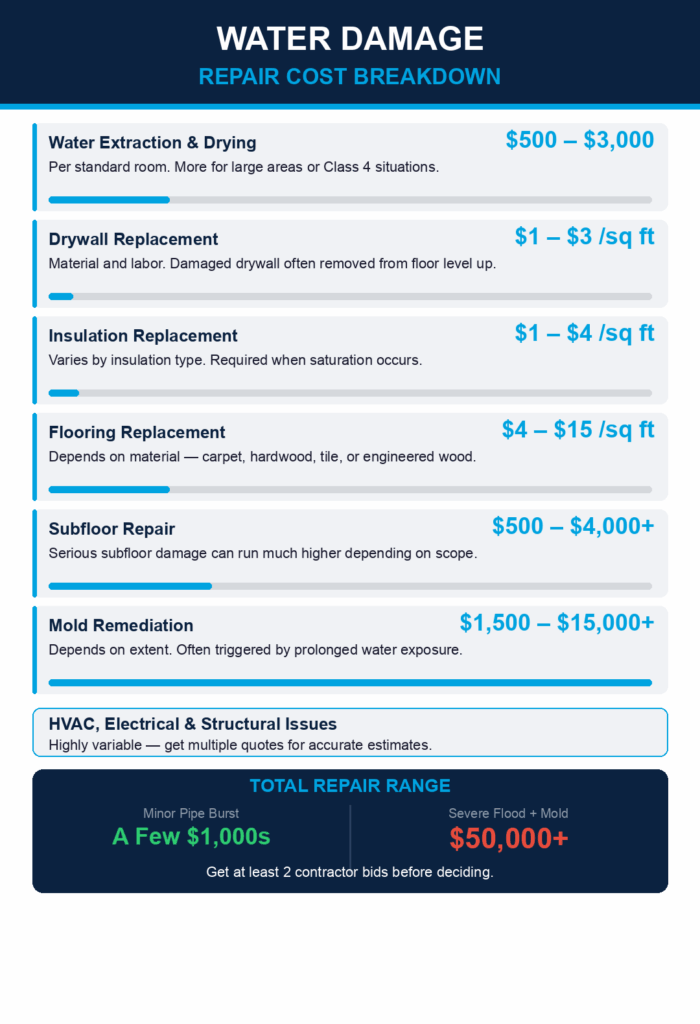
Total repairs can range from a few thousand dollars for a minor pipe burst to $50,000+ for severe flooding with mold. Before deciding whether to repair, get at least two contractor bids. The numbers may help you decide whether selling as-is makes more financial sense.
Selling a Water-Damaged Home — Your Realistic Options
Option 1: Repair and list. If you have insurance proceeds, savings, or access to financing for repairs, this path can maximize your gross sale price. But repairs take time, often cost more than the initial bid, and a traditional sale still carries risks around financing and appraisal. Estimate 3–6 months minimum.
Option 2: List as-is on the open market. This means full disclosure, no repairs, and pricing the home to attract buyers who can handle the work. Your buyer pool shrinks significantly — mostly investors and cash buyers. Expect more negotiating and longer time on market.
Option 3: Sell directly to a cash buyer. Fastest path. No repairs, no staging, no showings, no lender appraisals. We review the property, make a fair cash offer based on its current condition, and can close in as little as 7–14 days.
The right option depends on your timeline, your finances, and how much energy you want to put into the process.
Frequently Asked Questions
Can I sell a house with water damage and mold in Houston?
Yes. Cash buyers regularly purchase homes with water damage and mold. You must disclose both conditions on the Seller’s Disclosure Notice. A traditional mortgage buyer may have difficulty financing a home with active mold, which is one reason cash sales work better in these situations.
Does my homeowner’s insurance cover water damage before I sell?
It depends on your policy and the cause of the damage. Sudden, accidental damage (like a burst pipe) is typically covered. Gradual water intrusion or flood damage from external sources usually requires a separate flood insurance policy. Contact your insurer and document everything before making any repairs.
How much does water damage lower my home’s value in Houston?
Remediated water damage typically reduces sale price by 10–25% compared to comparable undamaged homes, depending on the neighborhood, severity, and quality of repairs. Unremediated or ongoing damage creates a larger discount and a smaller buyer pool.
Do I have to use a professional remediation company?
You are not legally required to, but professional remediation with a written report and clearance documentation is the most convincing proof for buyers and their lenders that the problem has been fully addressed. DIY remediation is harder to verify and may still trigger questions during inspection.
How do I find the moisture in my walls?
Professional remediation contractors use a moisture meter — a device that measures the moisture content inside walls, subfloors, and ceilings without cutting. If you suspect hidden moisture, hiring a professional for a moisture assessment before you sell is worth the cost. Surprises during buyer inspection are worse than knowing upfront.
If you have worked through all of this and decided that repairs and a traditional sale are more than you want to take on right now, we can help. We buy water-damaged homes as-is across Greater Houston — no repairs, no showings, no financing contingencies.
Get A Cash Offer For Your House Today!
Fill Out The Form To Get Started!
Fill out the form or call us at 832-554-4775 to get started.