

How to Sell a House That Flooded in Texas
Flooding is one of the most overwhelming things a homeowner can experience. Whether a burst pipe let loose, a storm sent water rushing through your doors, or years of drainage issues finally caught up with you — the aftermath is stressful, expensive, and emotionally exhausting. And on top of all of it, you may be wondering: can I even sell this house?
The short answer is yes — and we know this because we’ve bought plenty of them. At Leap Properties, we buy flood-damaged homes directly from homeowners who need to move on without the burden of repairs, showings, and months of uncertainty. We’ve seen every level of flood damage imaginable, and we understand exactly what sellers are going through.
In this guide, we’ll walk you through everything you need to know about selling a house that has flooded — your legal obligations, your options, and how to decide which path makes the most sense for your situation.
What Flooding Does to a Home’s Value
The hard truth is that flood damage hurts a home’s value — even after repairs. Real estate professionals who specialize in water-damaged properties consistently see price reductions of 20% to 30% compared to similar homes without a flood history. And that’s after the work is done.
This happens for a few reasons. First, flood history follows the home through disclosure records, making future buyers and their lenders nervous. *It is important to understand flooding in the Houston area. Second, even a fully repaired home may carry hidden issues — mold in places that weren’t treated properly, compromised structural materials, or systems (electrical, HVAC, plumbing) that deteriorated faster than expected. And third, if your home is in a FEMA-designated flood zone, buyers face higher insurance premiums and stricter mortgage requirements — which shrinks your buyer pool significantly.
None of this means you’re stuck. It just means the path forward requires realistic expectations and a clear-eyed look at your options.
Your Legal Obligation: Disclosing Flood Damage
Before we talk strategy, let’s talk about what you’re legally required to do. Flood disclosure laws vary by state, but the general rule is this: if you know about flood damage, you must disclose it.
There is no federal requirement to disclose flood history when selling a home. However, 29 states have explicit flood disclosure laws, and nearly every state has a “material fact” clause — meaning that anything significantly affecting the property’s value or desirability must be disclosed. Flood damage almost always qualifies.
When you disclose, you’ll typically need to share:
- Whether the home has experienced flooding or water damage
- Whether the property is in a FEMA Special Flood Hazard Area
- Any prior flood insurance claims filed on the property
- What repairs were made and when
Being transparent protects you from legal liability down the road. We’ve seen sellers try to hide flood history, only to face lawsuits after closing. It’s not worth it. The good news: full disclosure doesn’t mean you can’t sell — it just means the right buyer needs to know what they’re getting.
Your Three Main Options for Selling a Flooded Home
Once you understand your disclosure obligations, you have three primary paths forward. Which one makes sense depends on the severity of the damage, your financial situation, and how quickly you need to move.
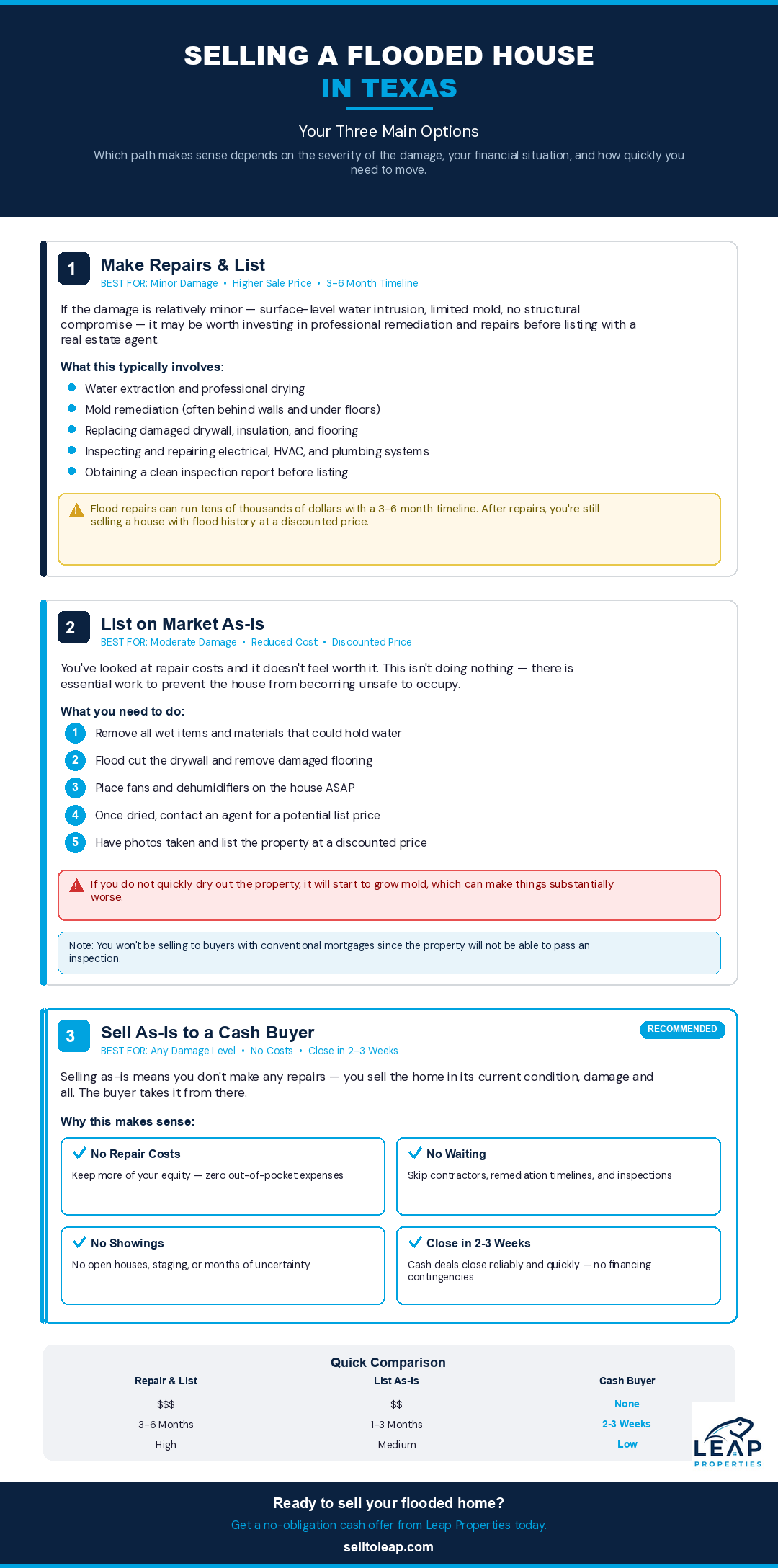
Option 1 — Make Repairs and List on the Market
If the damage is relatively minor — surface-level water intrusion, limited mold, no structural compromise — it may be worth investing in professional remediation and repairs before listing with a real estate agent. Done well, this approach can help you attract traditional buyers who are financing through a mortgage.
What this typically involves:
- Water extraction and professional drying
- Mold remediation (often behind walls and under floors)
- Replacing damaged drywall, insulation, and flooring
- Inspecting and repairing electrical, HVAC, and plumbing systems
- Obtaining a clean inspection report before listing
The challenge is that flood repairs are rarely cheap or fast. Depending on severity, full remediation can run tens of thousands of dollars — and the timeline is often three to six months before the home is ready to show. After all that, you’re still selling a house with a flood history at a discounted price. For some sellers, the math works. For many, it doesn’t.
Option 2 — List on the Market and Sell As-Is
In this option, you have looked at the costs of remodeling or repairing the house and it doesn’t feel like it is worth it. Now one thing is that this isn’t not doing anything at all, there is some work you should do to the house, otherwise it could turn into a situation where the house is unsafe to occupy.
Here is what this would entail:
- Get rid of all of the items from the house that were are wet or could hold water.
- Flood cut the drywall and remove flooring.
- Place fans and dehumidifiers on the house ASAP.
- After the house has been dried out, contact an agent to get a potential list price.
- Have photos taken and list the property. You will have to sell it at a discounted price, and you won’t be selling to someone trying to get a conventional mortgage since the property will not be able to pass an inspection.
*If you do not quickly dry out the property from flooding it will start to grow mold, which can make things substantially worse.
Option 3 — Sell As-Is to a Cash Buyer
This is the path we help with every day at Leap Properties. Selling as-is means you don’t make any repairs — you sell the home in its current condition, damage and all. The buyer takes it from there.
Here’s why this makes sense for a lot of flood-damaged homeowners:
- No repair costs out of pocket. You keep more of what equity you have
- No waiting on contractors, remediation timelines, or inspections
- No open houses, showings, or months of uncertainty
- No financing contingencies. Cash deals close reliably and quickly
- You can close in as little as two to three weeks
“We know that a flooded house doesn’t define its owner’s situation — and sometimes the fastest path forward is the most financially sound one. We’ve helped dozens of homeowners skip the repair process entirely and walk away with cash in hand.”
— Leap Properties
Frequently Asked Questions
Can I sell a house that has flooded?
Yes, absolutely. Flooded homes are bought and sold every day. The key is understanding your disclosure obligations, being honest about the damage, and finding the right buyer for the property as it stands. Cash buyers like Leap Properties purchase flood-damaged homes regularly — we’re comfortable with the complexity that traditional buyers aren’t.
Do I have to tell buyers about past flooding?
In most states, yes. Flood damage is considered a material fact that must be disclosed. Even in states without explicit flood disclosure laws, failing to disclose known damage can expose you to legal liability after closing. We always recommend full transparency — it protects you and ensures the transaction holds up.
How much does flood damage lower a home’s value?
It depends on the severity, but industry experts typically see a 20–30% reduction in value for homes with a flood history, even after repairs. The discount reflects the perceived risk, higher insurance costs, and the home’s history. Selling as-is tends to close the gap because you’re pricing for the condition honestly from the start.
How fast can I sell a flood-damaged home?
With a traditional listing, you’re looking at months — often longer if repairs are needed first. With a cash buyer like Leap Properties, the process can move in as little as two to three weeks from your first conversation to close.
What if there’s mold?
Mold is common in flooded homes, and it doesn’t scare us. We factor the remediation cost into our offer and handle it ourselves. You don’t need to treat it before we buy.
We Buy Flooded Homes — Contact Leap Properties
If your home has flooded and you’re trying to figure out your next step, we’d love to have a no-pressure conversation. We’ve worked with homeowners dealing with everything from a single basement flood to catastrophic storm damage — and we’ve seen the relief that comes from having a clear, straightforward path out.
We know this situation is stressful. We know the last thing you want is to navigate months of repairs, negotiations, and uncertainty. That’s exactly why we exist — to give distressed homeowners a simple, dignified way to move forward.
Reach out to Leap Properties today for a free, no-obligation cash offer. We’ll assess your home, answer your questions honestly, and give you an offer you can actually make a decision around — with no pressure and no strings attached.
Get A Cash Offer For Your House Today!
Fill Out The Form To Get Started!