
How to Sell a Houston Home with Mold
Mold is one of the most feared words in a Houston when it comes to a home. The combination of heat, humidity, and the city’s flooding history makes Houston one of the most mold-prone cities in the country. If your home has a mold problem, selling is still possible, but the process is different from a standard sale.
We buy mold-damaged homes across Greater Houston and we will go through and explain the types of mold that matter most, what remediation actually costs, what Texas law requires you to disclose, and what your realistic options are for selling.
Why Mold Is Such a Complication in Houston Real Estate
Houston has the perfect climate for mold. Warm temperatures, high humidity, and frequent flooding create the conditions mold needs to grow: moisture and organic material. After Hurricane Harvey in 2017, mold became a citywide problem as tens of thousands of homes that were not dried out quickly developed significant infestations.
Even without flooding, Houston homes develop mold from:
- HVAC condensation lines that clog and drip inside walls
- Roof leaks that allow moisture to enter attics and wall cavities
- Slow plumbing leaks behind walls or under sinks
- Poor bathroom ventilation that allows humidity to condense in wall cavities
- Crawlspace moisture in pier and beam homes
The core problem for sellers: most lenders will not finance a home with visible or active mold until remediation is completed and a clearance test confirms the mold has been removed. This shrinks the buyer pool significantly and can derail deals that are already under contract.
Types of Mold That Matter Most in Home Sales
Mold comes in thousands of species. The ones that create the most concern in residential real estate:
- Stachybotrys chartarum (Black Mold): The most notorious mold type. Dark greenish-black, grows on water-damaged cellulose materials like drywall and wood. Associated with health concerns at high levels. Triggers the strongest buyer and lender reactions.
- Cladosporium: Dark green or black, very common, often found in bathrooms, basements, and HVAC systems. Easier to remediate than Stachybotrys.
- Aspergillus: A large family of mold species, some of which can cause respiratory issues. Common in water-damaged homes.
- Penicillium: Often blue-green. Common in homes with water damage, particularly on building materials.
For a home sale, the type of mold matters less than the extent and location. Active mold anywhere in a home is a red flag for buyers and lenders, and the species determines the remediation approach, but the presence of any active mold will trigger lender and buyer concerns.
Texas Mold Disclosure Requirements
Texas requires sellers to disclose known mold on the Seller’s Disclosure Notice. The SDN asks directly about mold or mold-causing conditions. If you know mold is present, or if you know of conditions that are likely to cause mold (like a leaking roof or ongoing water intrusion), you must disclose it.
Important points:
- You must disclose mold you know about. You are not required to hire a mold inspector to find mold you were not aware of.
- If mold was professionally remediated, you should disclose the history and provide documentation of the remediation. Full disclosure with documentation can actually build buyer confidence.
- Failing to disclose known mold can result in post-sale legal claims. Texas courts have held sellers liable for undisclosed mold years after closing.
Texas also has specific regulations governing the mold remediation industry. Contractors doing mold remediation on properties in Texas must be licensed by the Texas Department of Licensing and Regulation (TDLR). Work done by unlicensed contractors may not satisfy lender requirements even if it is physically complete.
What Mold Remediation Involves
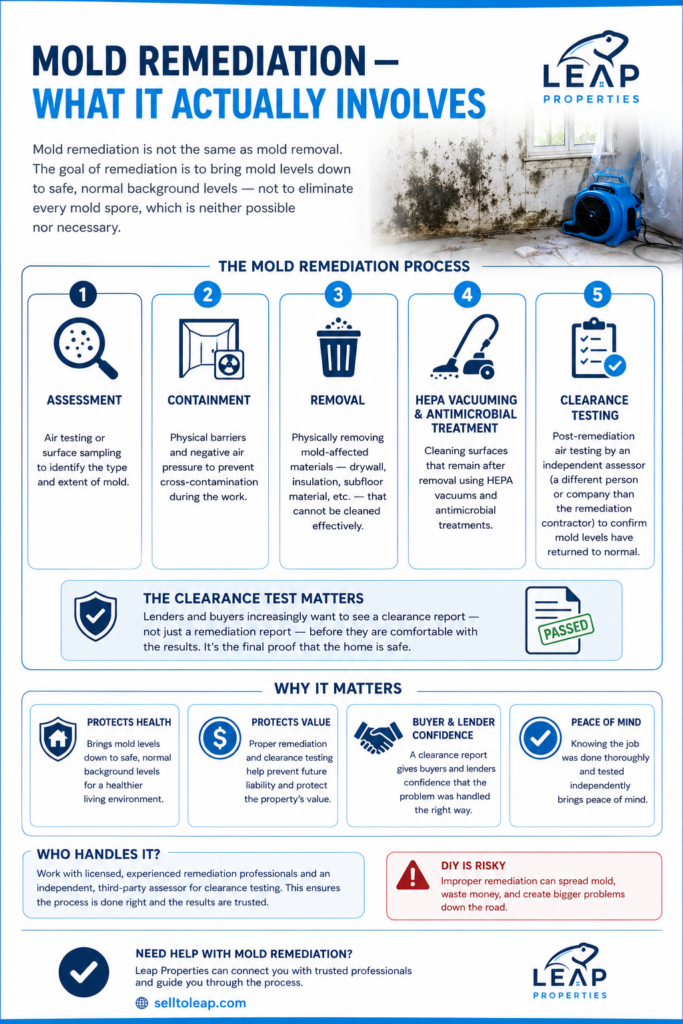
Mold remediation is not the same as mold removal. The goal of remediation is to bring mold levels down to safe, normal background levels — not to eliminate every mold spore, which is neither possible nor necessary.
A professional remediation project typically involves:
- Assessment: Air testing or surface sampling to identify the type and extent of mold.
- Containment: Physical barriers and negative air pressure to prevent cross-contamination during the work.
- Removal: Physically removing mold-affected materials — drywall, insulation, subfloor material, etc. — that cannot be cleaned effectively.
- HEPA vacuuming and antimicrobial treatment: Cleaning surfaces that remain after removal.
- Clearance testing: Post-remediation air testing by an independent assessor (a different person or company than the remediation contractor) to confirm mold levels have returned to normal.
The clearance test matters. Lenders and buyers increasingly want to see a clearance report — not just a remediation report — before they are comfortable with the result.
Mold Remediation Costs in Houston
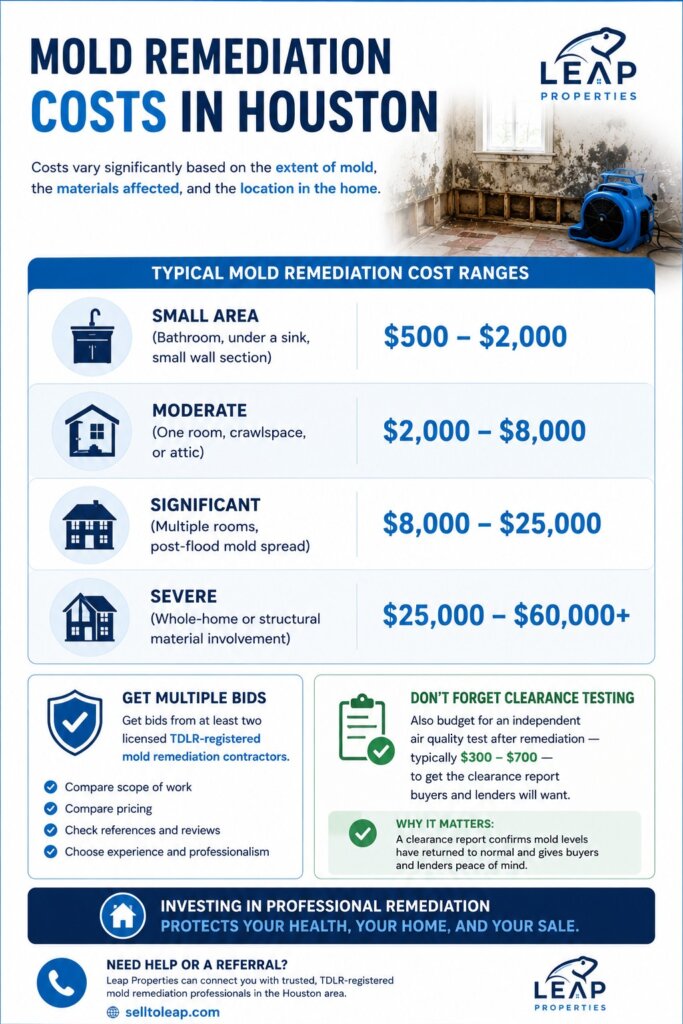
Costs vary significantly based on the extent of mold, the materials affected, and the location in the home:
- Small area (bathroom, under a sink, small wall section): $500–$2,000
- Moderate (one room, crawlspace, or attic): $2,000–$8,000
- Significant (multiple rooms, post-flood mold spread): $8,000–$25,000
- Severe (whole-home or structural material involvement): $25,000–$60,000+
Get bids from at least two licensed TDLR-registered mold remediation contractors. Also budget for an independent air quality test after remediation — typically $300–$700 — to get the clearance report buyers and lenders will want.
Options for Selling a Mold-Damaged Home
Option 1: Remediate and list. If the mold is in a contained area and you have the budget, professional remediation with clearance documentation opens up the full buyer pool. Budget 4–8 weeks for the full process.
Option 2: List as-is with full disclosure. Disclose the mold, price the home to reflect the remediation cost, and limit your buyer pool to cash buyers and investors. Expect significant negotiation on price.
Option 3: Sell as-is to a cash buyer. We have seen mold situations of every severity. We assess the home’s condition, account for remediation costs in our offer, and can close in as little as 7–21 days — no remediation required from you.
Frequently Asked Questions
Can a house with mold be sold in Texas?
Yes. You must disclose known mold on the Seller’s Disclosure Notice. A traditional mortgage buyer may face lender hurdles if there is active mold. A cash buyer can purchase the home in its current condition.
Do I have to hire a licensed remediation contractor?
TDLR requires mold remediation on larger projects (over 25 square feet) in Texas to be performed by a licensed Mold Remediation Contractor. Using an unlicensed contractor for significant mold work can create compliance issues and may not satisfy lender requirements.
Will mold come back after remediation?
Mold will not come back on properly remediated surfaces if the moisture source is eliminated. If the underlying moisture problem — the leak, the drainage issue, the condensation — is not fixed, mold can return. Addressing the root cause is part of a complete remediation.
How fast does mold grow after flooding?
Mold can begin to grow in as little as 24–48 hours after flooding in warm, humid conditions like Houston’s climate. This is why quick drying is critical after any water intrusion. Homes that sat with standing water for days or weeks are at high risk for significant mold growth.
What if mold is only in the attic?
Attic mold is common in Houston, often caused by inadequate ventilation or roof leaks. It is easier to contain than interior mold but still requires disclosure and remediation if you are selling traditionally. A cash buyer can assess and purchase an attic mold situation as-is.
If you have decided that the remediation process, the costs, and the traditional sale friction are more than you want to take on right now, reach out to us. We buy mold houses as-is across Greater Houston.
Get A Cash Offer For Your House Today!
Fill Out The Form To Get Started!
Call 832-554-4775